
Behind the Blooms at Jim & Mary’s RV Park
One of the first things guests tend to notice when they arrive at Jim & Mary’s RV Park is the gardens. It’s pretty common to see someone wandering through the park with their morning coffee, stopping for a moment to admire the flowers. We hear compliments about them all the time—and honestly, it never really gets old.
What most folks don’t see, though, is how early the whole thing starts. January, usually.
Yes, January.
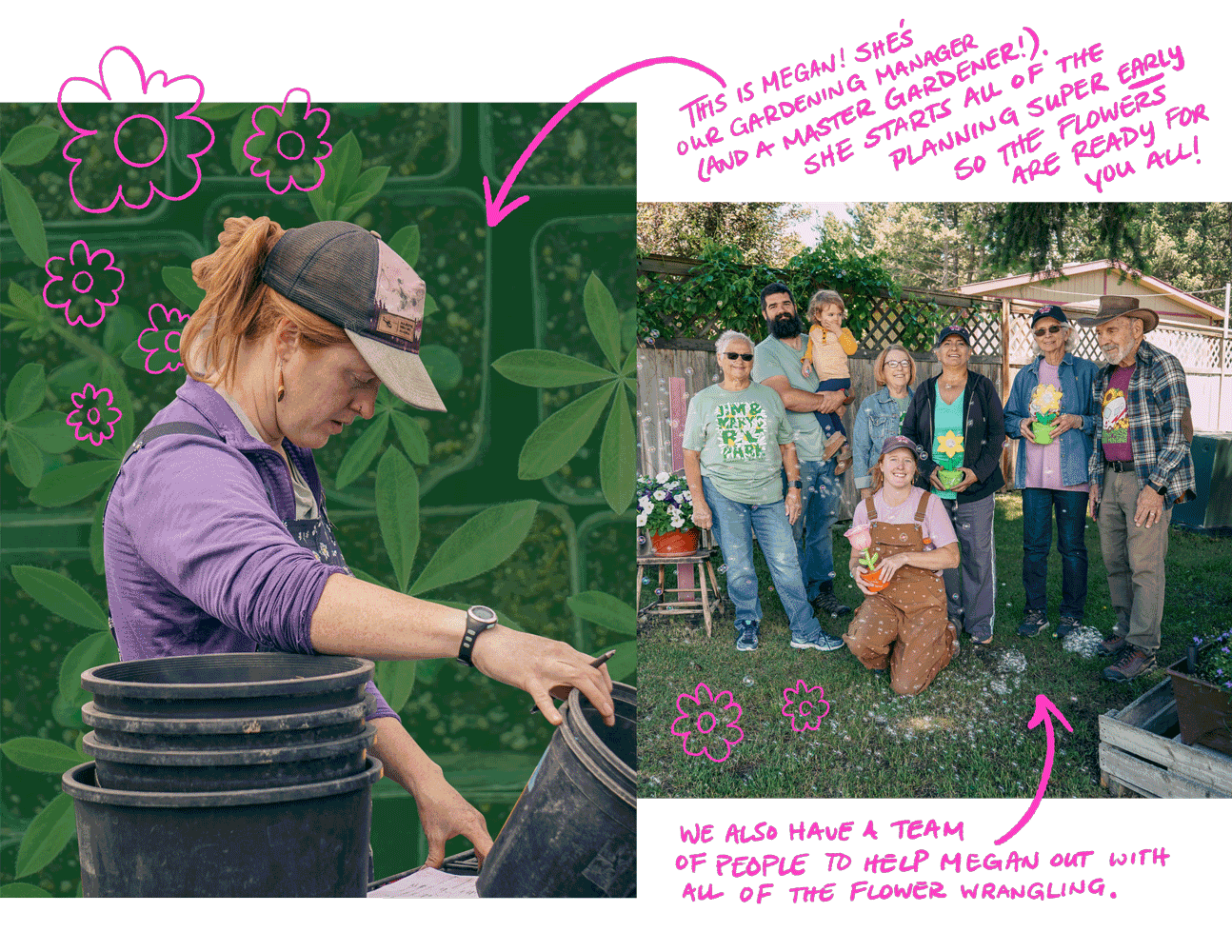
Normally, January in Missoula means snowbanks, icy mornings, and the same three sweaters in heavy rotation. This year, though? Winter has been taking it easy on us. But mild or not, we’re already thinking about flower beds. Plotting them out, actually. Planning, prepping, and spreadsheets from colors and shapes to spacing and more—where something tall might frame a corner, where a bright pop of color will catch the eye as people walk through the park.
It’s a fine art that combines design instincts, trial and error, and plenty of patience.
Montana gardening keeps you humble, too. Winters here can be…well, brutal. So planning a garden isn’t just about making it look nice. It’s about choosing plants that can survive our mood-swing seasons and still put on a good show come July.
Now, if we had to start from scratch every single year—rip everything out and begin again—it would be a massive undertaking. Honestly, probably a little overwhelming. So we lean on perennials, which are the dependable regulars of the garden world. These are the plants that come back year after year from the same root system. They bloom in the warmer months, fade away once winter arrives, then—if they’ve handled the cold well enough—reappear the following spring like they never left.
Around the park, you’ll spot perennials like primroses, lungworts, bee balm, peonies, lilies, daffodils, tulips, and dusty miller tucked throughout the beds. They give the garden its backbone, so to speak.
Of course…this is Montana. And Montana winters don’t always play fair.
Some years, the cold snaps linger longer than expected, or a plant simply reaches the end of its run. It happens. When April rolls around, and we start cleaning out the beds, we take stock of who made it through the winter and who didn’t. A little like checking attendance after a long vacation. Whatever didn’t survive gets replaced later in the season when we start filling things back in.
Which brings us to the other half of the garden—the annuals.
Annual flowers are the sprinters of the plant world. They grow, bloom, and finish their whole life cycle in one season. Then they’re done, leaving behind seeds for the next generation. These are the flowers that really bring the fireworks of color during the summer months.
Geraniums. Sunflowers. Marigolds. Snapdragons. Coleus. Impatiens.
All perfect for filling out the beds.
Every now and then, though, something funny happens. A seed from the previous year manages to survive the winter and pops up unexpectedly in the spring. Just a tiny green sprout, minding its own business in the soil. When we spot one of those, I can’t help but root for it a little—because surviving a Montana winter is no small accomplishment! The little thing is basically a rebel. Tough as nails. Go on, you stubborn flower.
But almost all of our flowers start the more traditional way: from seed.
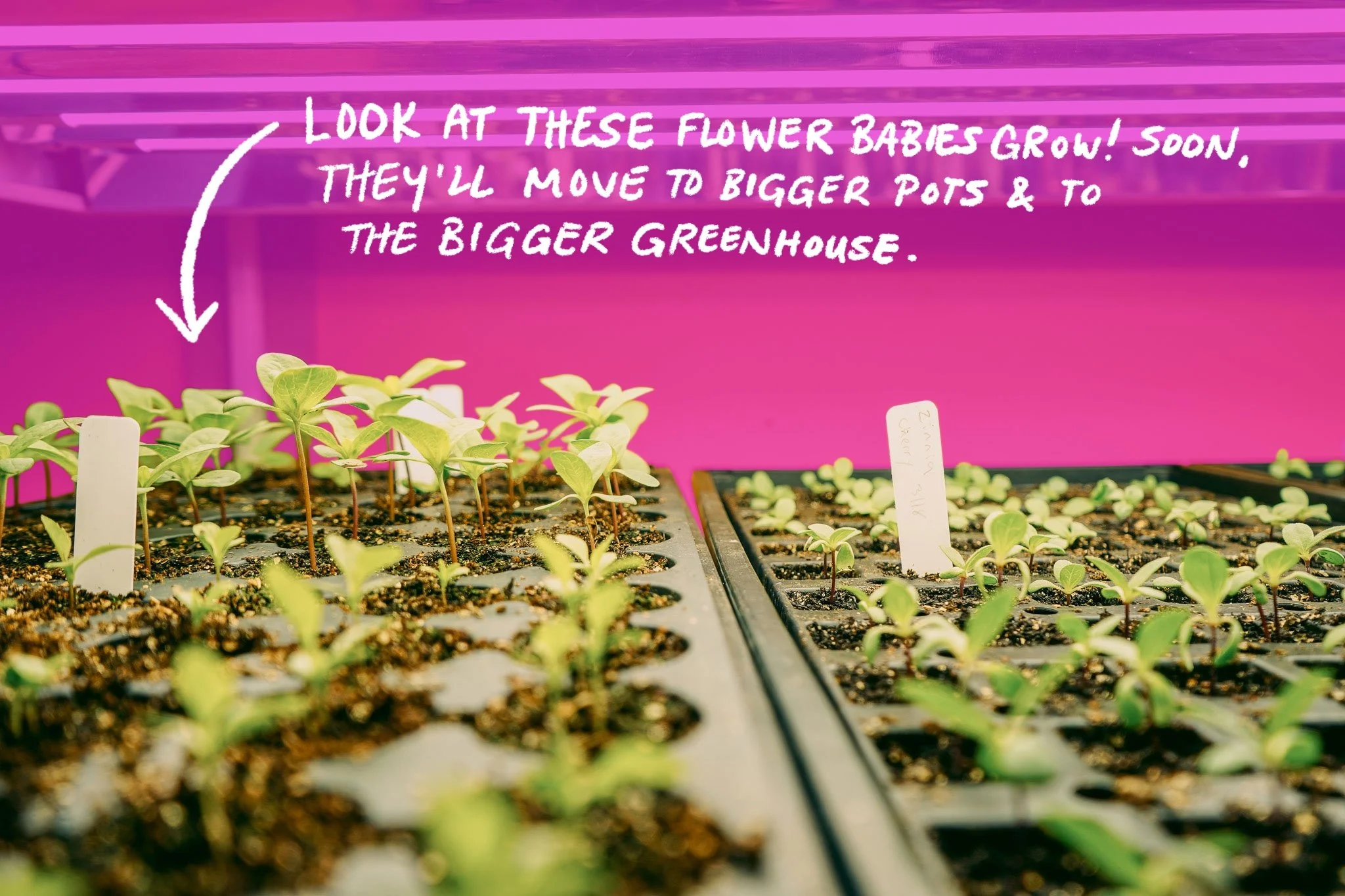
Seeding usually kicks off sometime between late February and early March and continues steadily until the last batch of flowers is ready to be planted outside. It’s a slow, careful process. Every type of flower has its own personality, you might say, and its own preferred growing conditions.
Petunias, for example, are fairly quick about it. They’ll sprout in about four or five days, then spend another week or so under heat lamps soaking up warmth and light. After roughly two weeks in the seeding shed, they’re strong enough to move on to bigger pots.
Other plants take longer. Some are fussier.
Gardening will teach you patience whether you want the lesson or not.
Once the seedlings are sturdy enough to handle it, we move them into the greenhouse where they can keep growing until planting season arrives. For now, though, they stay tucked under those warm lamps—tiny, fragile, and quietly getting ready for their big moment out in the park.
By the time summer rolls around, those little seedlings will have transformed into the flowers guests stop to admire each morning. Bright beds along the walkways, baskets spilling over with color, and pockets of blooms tucked throughout the park.
And it all started back in January.
So the next time you’re wandering through Jim & Mary’s and find yourself stopping to admire the gardens…just know those flowers have been working on their debut for months.
